
ChainThink
Stay ahead, master crypto insights
The First 100 Days of Trump's Presidency: A Review and Outlook on Crypto Policies
The First 100 Days of Trump's Presidency: A Review and Outlook on Crypto Policies

2025-04-30 16:26
The Trump administration's first 100 days in office have established an unprecedented regulatory framework for the cryptocurrency industry. Although there were fluctuations in TRUMP's value and the storm of tariff policies, the crypto market has officially gained recognition from the U.S. government's top leadership, ushering in a new era for the crypto world.
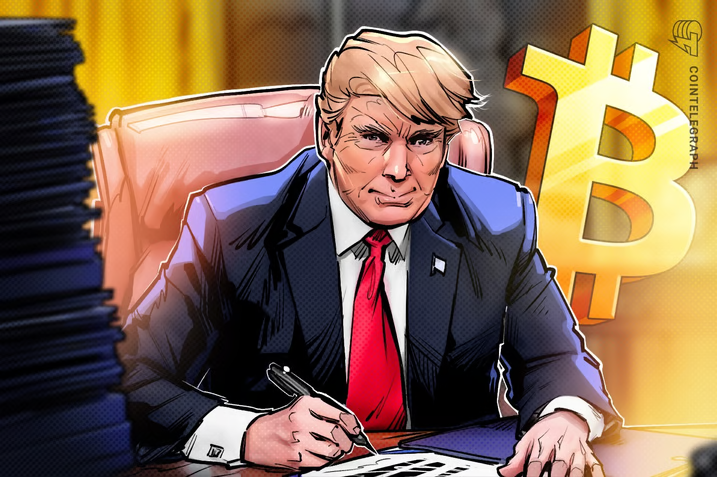
One, Policy Gift Bag: Issuing a "Growth Manual" to the Crypto World
First, within the first week of taking office, Trump signed the "Administrative Order on Modernizing the Regulatory Framework for Digital Assets", clearly establishing a "tiered regulatory system": Bitcoin and other basic cryptocurrencies are included in the commodity regulatory scope, applying the mature derivatives regulatory framework of CFTC; tokens with smart contract functions such as Ethereum are classified as "functional digital assets", subject to transparent regulatory rules set by SEC. This classification regulatory model ended the chaotic situation of "one-size-fits-all" regulation under the Biden era, leading to a 230% increase in user numbers at compliant exchanges like Coinbase and Kraken within 30 days.
The release of the "Guidance on Registration of Crypto Enterprises" on March 15 was a milestone. The guidance requires all crypto enterprises to complete "digital asset service provider" registration with FinCEN, and licensed enterprises can access the banking clearing system and enjoy federal deposit insurance protection. According to statistics from the U.S. Cryptocurrency Industry Association, within 45 days after the policy was released, over 1,200 enterprises submitted registration applications, with Grayscale and Fidelity's crypto subsidiaries among the first to obtain licenses, driving the compliance asset scale of the industry to exceed $1.2 trillion.

Regulatory personnel arrangements also sent strong positive signals. "Crypto Czar" David Sacks launched the "Regulatory Sandbox 2.0 Plan", allowing eligible DeFi projects to pilot decentralized financial services within a limited scope. The first batch of selected protocols such as Aave and Compound have already reached a custody scale of $37 billion in user assets. SEC's new chairman Paul Atkins publicly stated: "Our goal is not to eliminate innovation, but to establish a 'Nasdaq-style' compliant market for digital assets."
Two, Industrial Surge: Policy Rainwater Cultivates a "Digital Tropical Rainforest"
The Trump administration's "technology-neutral" policy is transforming into real industrial momentum. The "Strategic Digital Asset Reserve Act" includes 200,000 confiscated law enforcement Bitcoins in the national strategic reserve, and the accompanying "Mining Infrastructure Upgrade Subsidy Program" provides 30% electricity bill deductions for mining companies. Texas and Wyoming have rapidly risen to become global computing power centers, with the U.S. Bitcoin computing power increasing from 18% at the end of 2024 to 35% currently, creating over 150,000 high-paying jobs in related industries.

The compliance entry of traditional financial institutions has become the biggest highlight. JPMorgan and Bank of America have been approved to provide Bitcoin custody services to their clients, and their developed "Digital Asset Settlement Network" enables 24x7 cross-border transfers, reducing costs by 82% compared to the SWIFT system. Insurance giant Prudential launched its first "Cryptocurrency Performance Insurance", providing up to $500 million in security for DeFi protocols, driving the institutional investor holding ratio from 12% to 28%.
Under the compliance framework, innovation vitality continues to burst forth. Ripple reached a settlement with the U.S. Department of Treasury, and its cross-border payment system has been approved to connect to the banking networks of 117 countries; Stellar's digital dollar stablecoin StableUS has passed the Federal Reserve review and will soon become the first algorithmic stablecoin backed by a central bank. These developments have propelled the United States to the top of the global cryptocurrency competitiveness index.
Three, Global Fans: The U.S. Wants to Be the "Class Monitor" of the Crypto World
The Trump administration is reshaping the global cryptocurrency governance system with the banner of "compliance and innovation". At the G7 Finance Ministers' meeting, the U.S. pushed for the establishment of a "Global Digital Asset Regulatory Coordination Mechanism", leading the formulation of the "International Standards for Anti-Money Laundering in Cryptocurrencies", requiring all exchanges to connect to FinCEN's "Cryptocurrency Asset Tracking System". This move has received responses from financial powerhouses such as the UK and Switzerland, forming a "regulatory encirclement" around non-compliant markets.
In the technical standards field, the U.S. National Institute of Standards and Technology (NIST) released the first "Cryptocurrency Key Management Specification", becoming the world's first national-level key security standard. Enterprises that adopt this specification can enjoy a 15% tax reduction, a move that is attracting top platforms such as Coinbase and Binance US to migrate their core technological architecture to the U.S.

For emerging markets, the U.S. launched the "Crypto Financial Partnership Program", providing regulatory technology output to countries such as El Salvador and Nigeria, helping them establish blockchain-based digital payment systems. This "regulation + technology" dual output is consolidating the U.S.'s core position in the global crypto financial ecosystem.
Four, Future Mystery Box: These Surprises Are Worth Opening
The "Digital Asset Market Act" scheduled to be opened at the end of the year contains three heart-pounding "mystery boxes":
- Compliant Exchanges Transform into "Super Malls": In the future, on licensed platforms, users can buy Bitcoin spot, trade futures contracts, and even invest in crypto ETFs, just like shopping on Amazon, where you can buy books and visit supermarkets. It is expected that several "digital financial giants" with market values higher than Facebook will emerge.
- Institutional Capital Queues Up to Send Money: Asset management giants like BlackRock and Vanguard have been eager to get started. Once their crypto mutual funds are approved, it will be like opening Pandora's box, with a flood of $2 trillion in institutional capital pouring in. At that time, even retirement funds will allocate some Bitcoin as an "inflation hedge dessert".
- R&D Investments Create "Innovation Fireworks": A $2 billion innovation fund will be specifically allocated to zero-knowledge proofs, a kind of "cryptographic black technology." Perhaps next year we could see "invisible wallets" that hide transaction information or "cross-chain translators" that allow different blockchains to communicate. Silicon Valley geeks have already set up experimental setups in their garages.
Conclusion: Compliance Paves the Way, the Crypto World Runs Toward "Adulthood"
The Trump administration's 100-day policies have essentially held a "coming-of-age ceremony" for the cryptocurrency industry: no longer a speculative game played by the underdogs, but a regular army that has put on suits and entered Wall Street. When compliance becomes the foundation, innovation is like a skyscraper built on the foundation, growing taller and taller. Now, when you open Coinbase, you can see a 60-year-old retired teacher carefully studying K-line charts, and Fidelity's client managers recommending "crypto asset allocation portfolios" to high-net-worth clients. This is not a bubble celebration, but the dawn of a new financial era. Perhaps, in ten years, we will find that the policy wind of 2025 was the key force that blew away the fog of the cryptocurrency industry — letting the true technological value flourish under the sunlight of compliance.
Disclaimer: Contains third-party opinions, does not constitute financial advice


AI Practical Guide
This column focuses on the real progress of Agents: technological evolution, application implementat

Crypto Weekly
Tracking on-chain movements of the smart money and institutions

Frontier Insights
Spotlight on Frontier, trending projects, and breaking events

Blowup Alert
As the 2026 crypto bear market deepens, exit scams and project blowups are becoming increasingly fre

Regulatory Watch
American Crypto Act – timely interpretations of policies worldwide

Popular Airdrop Tutorial
Selected potential airdrop opportunities to gain big with small investments

FusnChain
FusnChain