
ChainThink
Stay ahead, master crypto insights
Pivot Analysis: Why Has the Crypto Market Financing Performed Poorly?
Pivot Analysis: Why Has the Crypto Market Financing Performed Poorly?

2025-04-15 08:24
Author: Kit
The Strain of Cryptocurrency Compliance Amid AI Technological Advancements
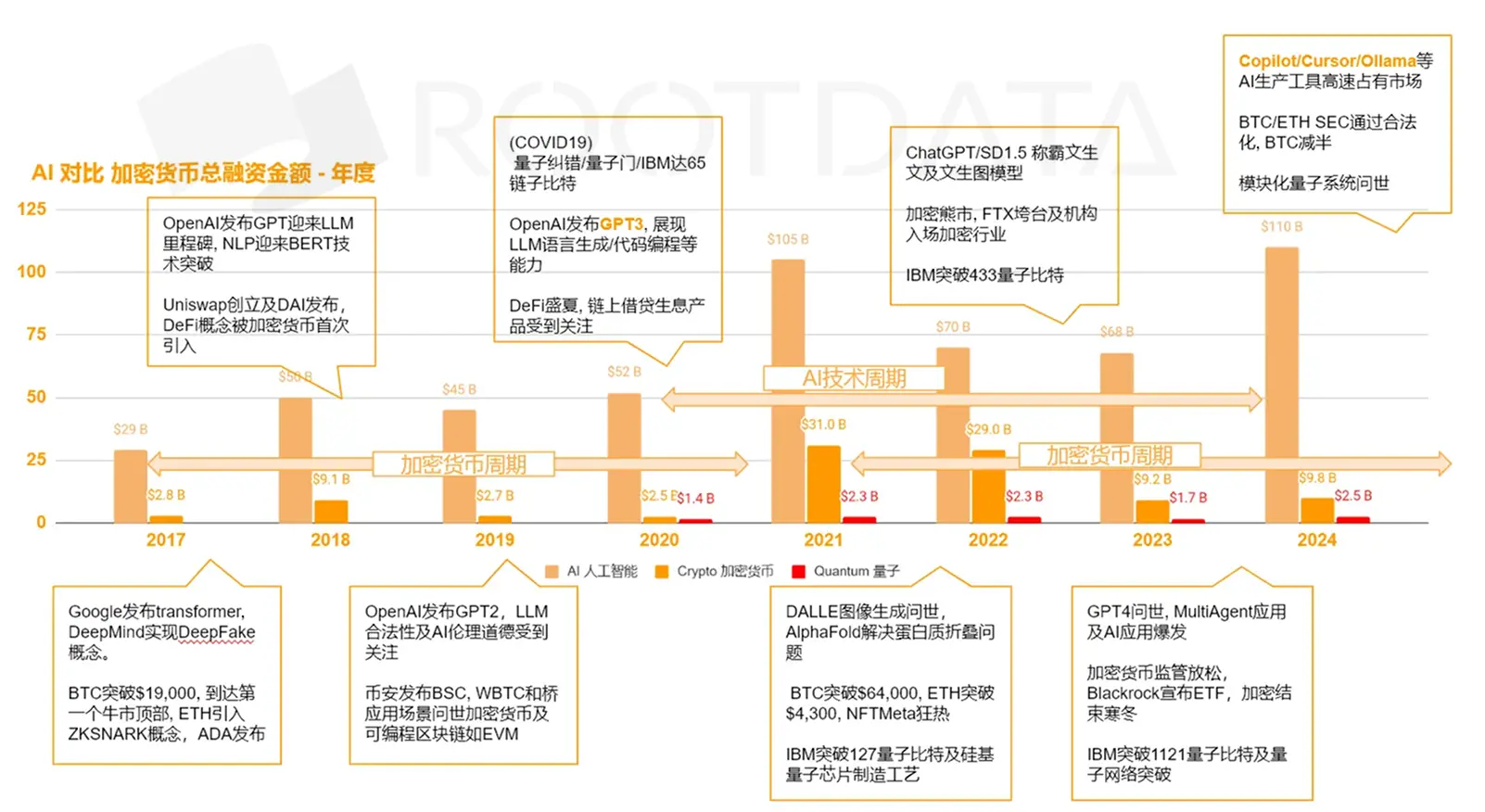
The cryptocurrency market is undergoing its second four-year technological cycle transformation since the ICO boom of 2017, while the AI industry has entered its tenth development cycle with breakthroughs from GPT-3 to LLM. According to Moore's Law, the cryptocurrency industry faces a cyclical test in 2025—total funding dropped from a peak of $31 billion in 2021 to $9.8 billion in 2024, a decline of 68%. Meanwhile, AI funding reached over $110 billion in 2024, creating a stark capital suction effect.
Behind this structural shift lies the divergence in technology maturity curves. Since the DeFi summer of 2020, the cryptocurrency industry has not seen a breakthrough technological narrative, while AI continues to release productivity dividends through the evolution of Transformer architecture. The divergence in funding between the two reflects capital's vote on the application potential of technology—while cryptocurrency projects are still following the traditional path of "token issuance - exchange," AI has already achieved commercial closed loops in fields such as healthcare, manufacturing, and education.
AI Winds Have Not Yet Reached, and Crypto Believers Still Need to Strive
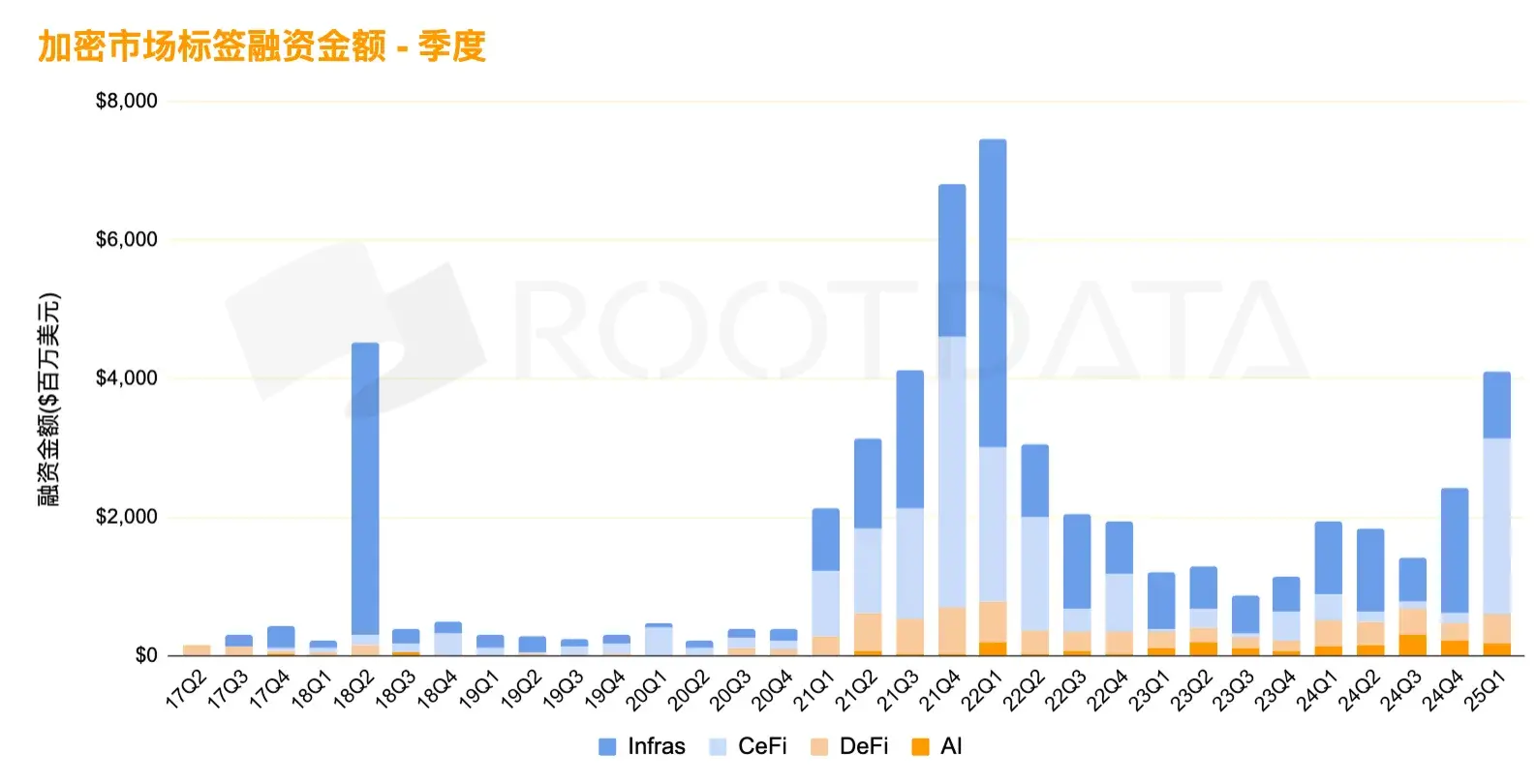
Q1 2025 data shows that while the crypto community remains engrossed in the myth of AI MEMES, eagerly imitating the first AI chatbot ELIZA in history, becoming the decentralized ELIZA in crypto history. Institutional investment in the crypto field has shown a clear division: the share of CEX and custodial projects fell from 90% at the peak after the DeFi summer and FTX collapse to 45%, while AI, DeFi, and infrastructure projects saw a counter-trend increase, accounting for 58% of the total funding during that period.
At the same time, the funding scale of AI-related crypto projects has shown dramatic fluctuations. Although there was a surge of $2.3 billion in investments in Q3 2024, by Q1 2025, this number dropped to $780 million, a decrease of 66%. This exposes the inherent contradiction in the "AI + blockchain" narrative: most current projects remain at the conceptual level, failing to address core pain points such as AI model training and data ownership. Meanwhile, the investment in traditional AI has increased from $40 billion annually between 2017 and 2020 to $80 billion annually after the launch of GPT3, entering its fourth technological cycle. In comparison, the growth in AI-related crypto financing is less than 1% of the above-mentioned traditional AI funding growth. How blockchain can cleverly combine AI technology to allow crypto believers to benefit from the overflow of AI funds deserves careful consideration. The acceleration of AI crypto financing also indicates that native crypto funds are willing to bet on finding this rare golden goose. In summary, crypto project founders should consider how to combine AI and infrastructure solutions to solve issues of ownership and trust that CeFi or traditional AI have struggled to address.
The Dual Dilemma of Liquidity
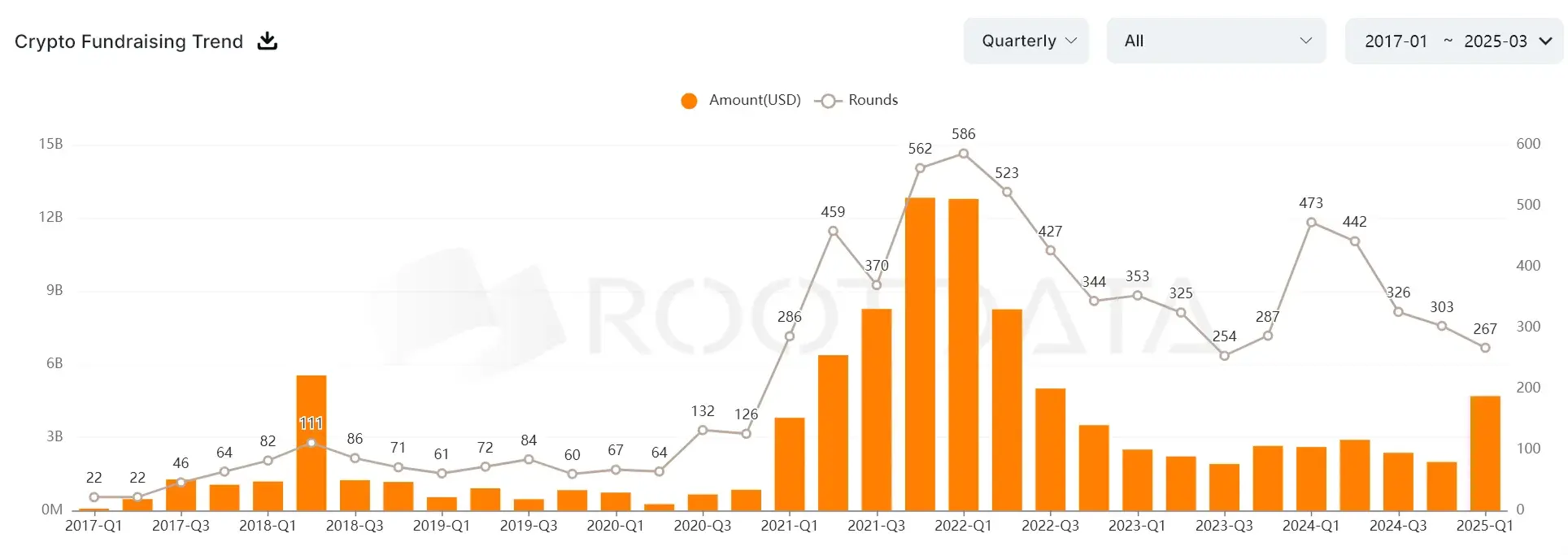
The divergence between quantitative tightening policies and on-chain stablecoin issuance has exacerbated market distortions. In March 2025, the on-chain circulation of USDC exceeded $98 billion, but at the same time, crypto risk investment only absorbed $4.6 billion. This liquidity bottleneck phenomenon reveals a deeper contradiction—institutional funds prefer to allocate BTC spot through ETFs and other compliant channels rather than support early-stage innovative projects. In fact, the amount of primary market funding in cryptocurrencies has fallen from a high of $31 billion in 2021 to $9.8 billion in 2024, a drop of 68%, and the number of financings has fallen from 1,880 in 2021 and 2022 to 1,544 in 2024, with the average financing amount dropping from $15.7 million in 2022 to $6.4 million, a decrease of 59%. The liquidity of institutional investment in crypto startups has nearly disappeared due to the boom of programmable blockchain technology and the benefits brought by the pandemic and quantitative easing in 2020.
Financing Dilemma: A Survivor Game for Founders
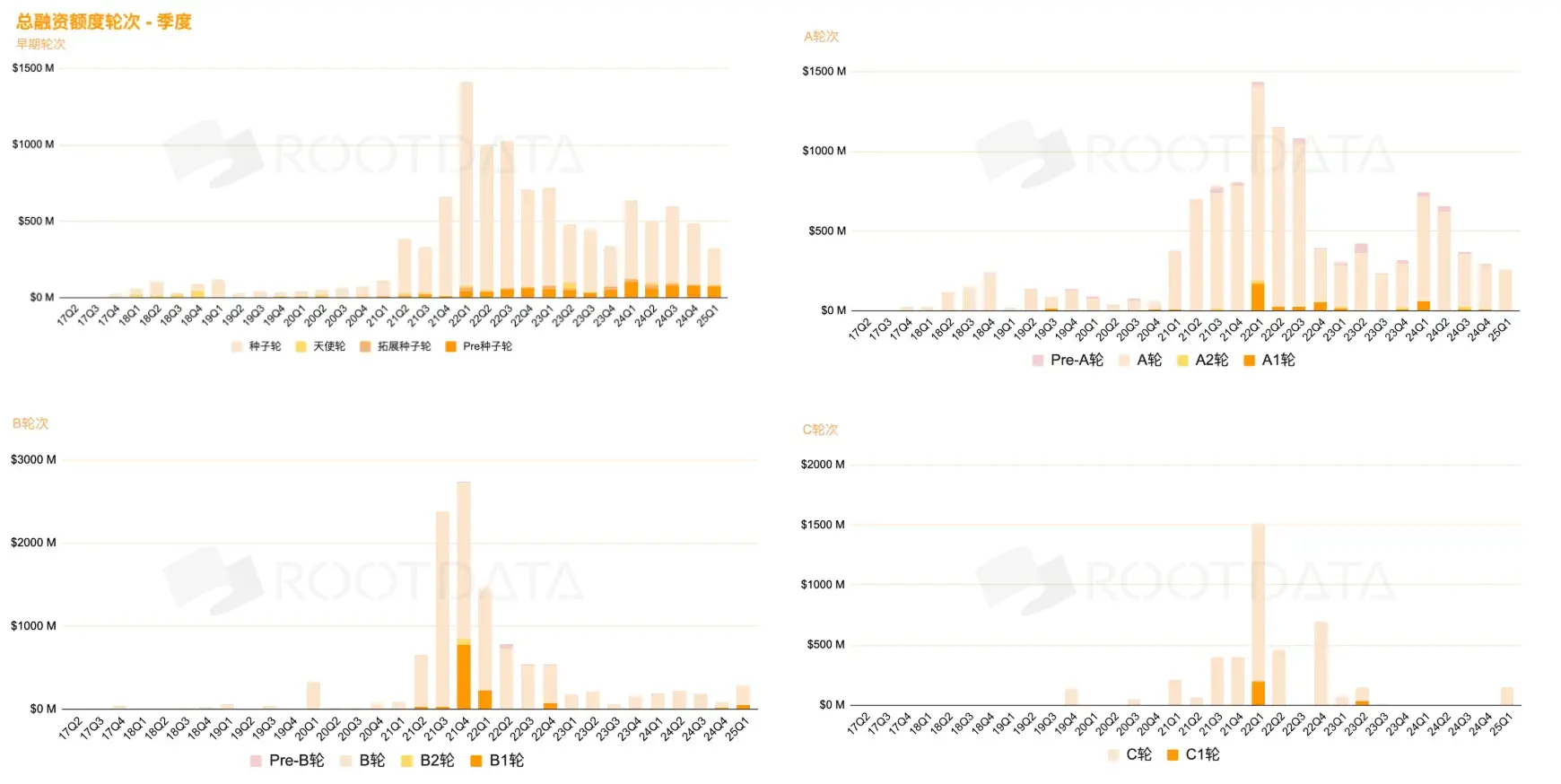
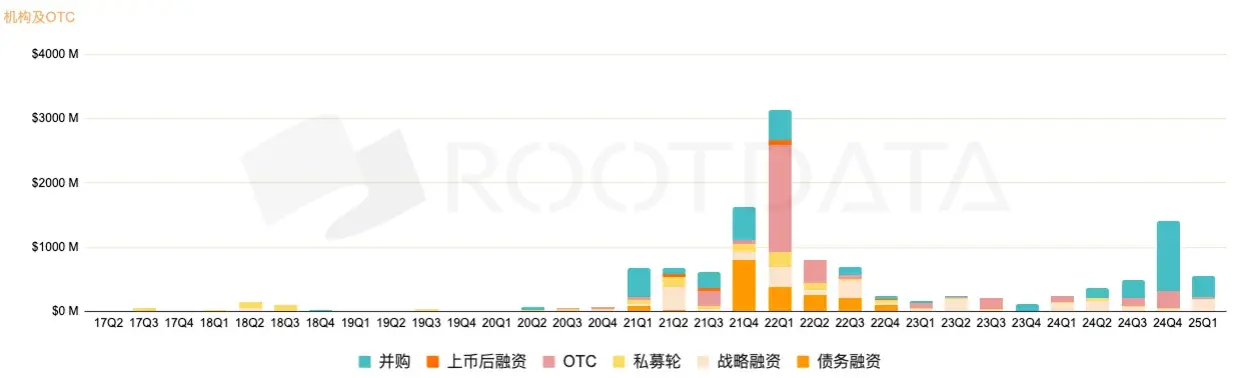
RootData data shows that later-stage crypto financing amounts have contracted significantly. The bubble of the 2021 cycle led to overvaluation, and currently, project valuations are being drained even in the A-round or seed round. No institutional investors were willing to publicly invest in C-rounds from Q3 2023 to Q4 2024. Strategic financing remains stable, while M&A and OTC transactions show that institutional funds, in a market with insufficient liquidity, are more willing to conclude off-the-record agreements.
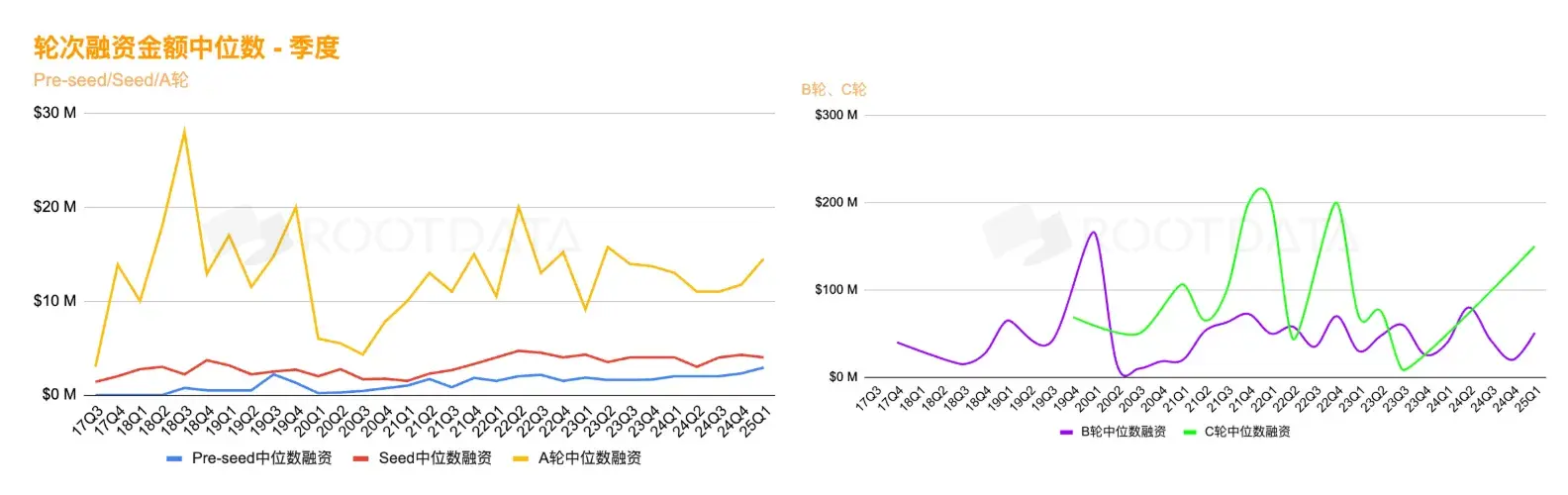
Notably, the median of all rounds of financing has steadily increased. Under the scenario of declining total financing, this indicates that funds are more willing to reduce the frequency of investments and increase the investment amount. Like a survival game, good capital reserves and bullets are fully bet on projects with better fundamentals and cash flow. At the moment of explosive growth in AI and crypto technologies, the competition for coins in the hands of investors among early crypto founders and startups has become intense. Among the 2,681 projects that received seed financing since 2017, only 281 made it to the A-round (an advancement rate of 10.5%), and fewer than 30 projects reached the C-round. This "one in ten" survival game reflects the systemic defects of early-stage projects in the industry:
From Valuation Bubbles to Value Return:
- The median seed round funding amount in the 2021 cycle was as high as $4.7 million, but it had fallen to $400 by Q1 2025. With the decline in total funding, its proportion continues to decrease, indicating that investment institutions' interest in crypto seed projects is decreasing.
- The median pre-seed round funding amount was $2 million at the same time, but it increased to $2.91 million by Q1 2025. While the total pre-seed round funding amount increased, the median funding amount rose, indicating that higher-risk but cheaper opportunities are attracting more crypto institutions.
- The total funding amount for A-rounds declined, but the funding amount per round increased from $10 million to $14.5 million. This suggests that crypto projects with PMF and cash flow are receiving more funding, while those that have not successfully turned a profit are dying in the seed round and struggling to get more funding.
Token Economics Failure:
B-round projects face token unlocking liquidity pressure, and the secondary market's ability to absorb it leads to a vicious cycle. According to RootData data, most projects experience significant selling pressure each time tokens are unlocked without new liquidity injected.
Technical Iteration Breakdown:
The 2021 funding bubble caused failed projects to concentrate in hot sectors of the previous cycle, such as cross-chain bridges and NFT platforms, which failed to keep up with new trends like ZK-Rollup, modular blockchains, and AI. LPs did not achieve positive returns in fund structures, leading them to seek survival through drastic measures. Institutional activities (such as OTC and M&A) have continued to rise in total volume.
Funding Crisis: A Sharp Decline in Scale
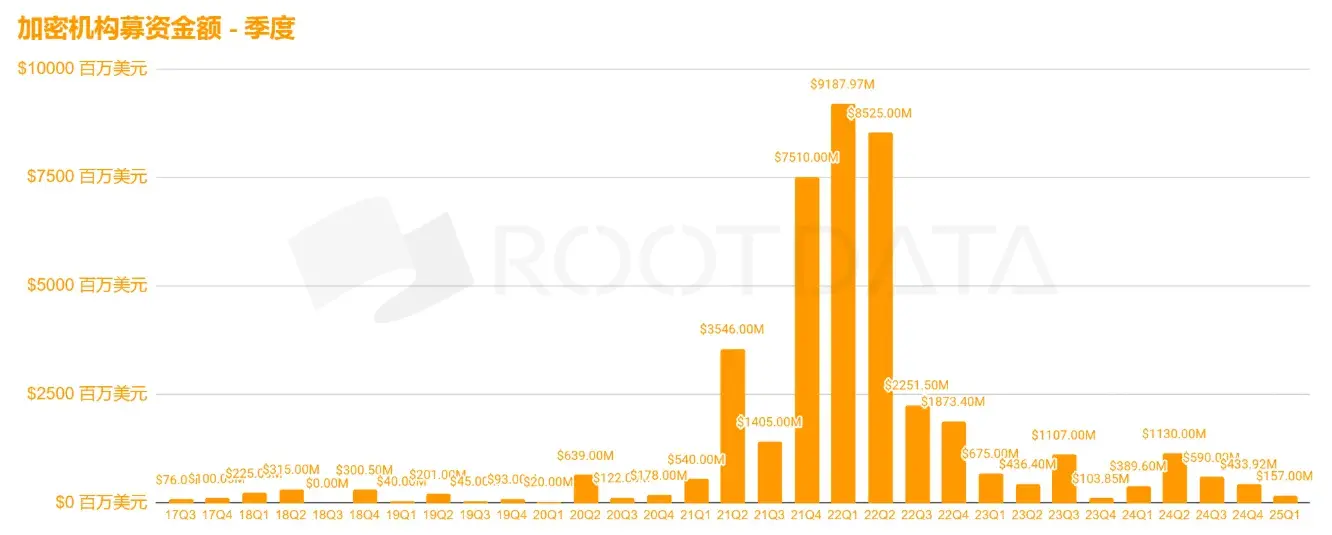
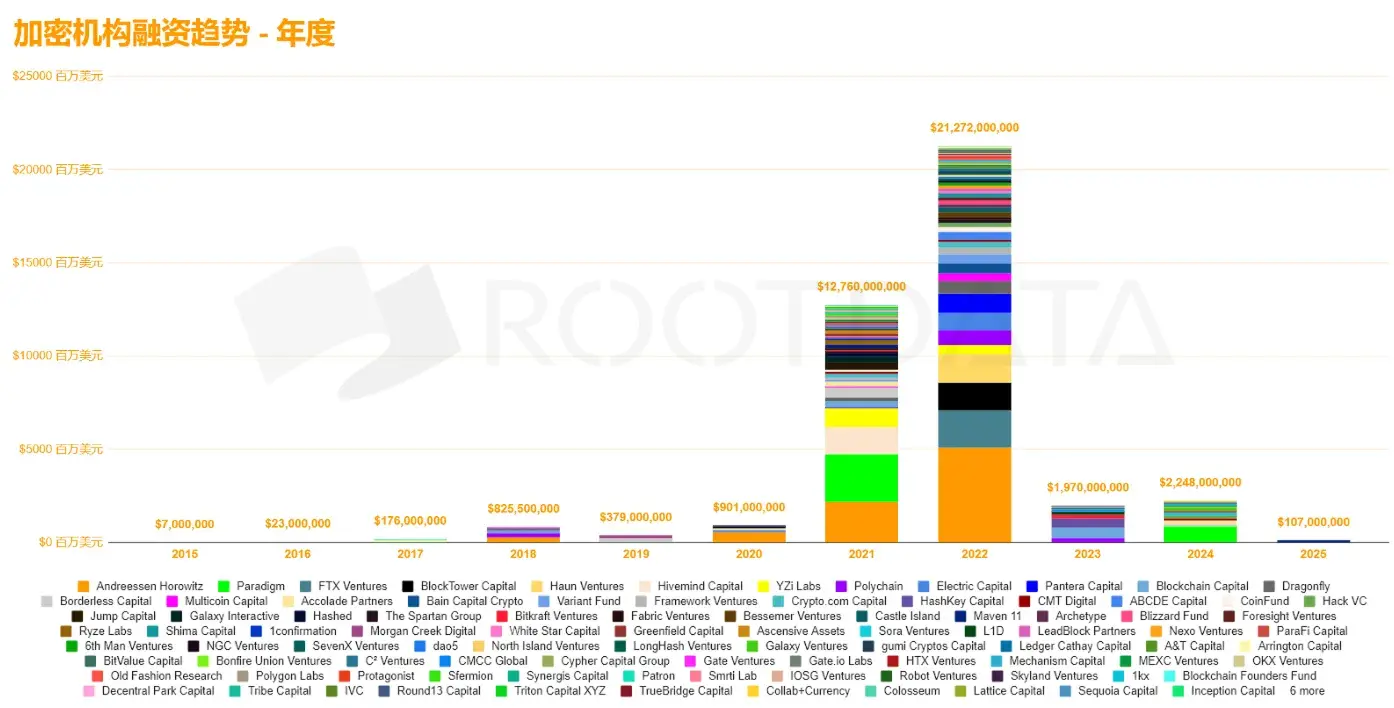
According to RootData data, the total fundraising of crypto institutions plummeted from a peak of $22 billion in 2022 to $2 billion in 2024, a drop of 91%. This shrinkage far exceeds the decline in Nasdaq tech stock fundraising during the same period (35%). Insufficient macro liquidity, the "century-old" crypto industry's token issuance and institutional IRR decline have led to a sharp decrease in interest from institutional LPs and independent investors in crypto project fundraising. This may reflect the lack of AI innovation in the current cycle of the crypto industry, which has not attracted attention from outside incremental funds.
Quarterly Data Confirms the Decline: After Q2 2024 (BTC halving cycle), fundraising dropped to $420 million, comparable to the level before the DeFi rise in 2020. This cycle's bull market did not bring incremental funds to crypto institutional fundraising.
Top Institutions Face Setbacks: A16Z faced a setback after three consecutive successful fundraising years from 2020 to 2022, and Paradigm's new fund size in 2024 shrank by 72% compared to its historical high in 2021.
After the cooling of the public fundraising market in crypto, private rounds and OTC transaction volumes surged by 35%. Financing completed through off-exchange channels in Q4 2024 and Q1 2025 reached $1.9 billion, with M&A and OTC accounting for 75% of the total. The prevalence of "off-the-table transactions" reflects institutional investors' anxiety about liquidity—by customizing token unlock terms and repurchase agreements, they aim to minimize the impact of market volatility on their investment portfolios.
The Crisis of Listing and Depreciation
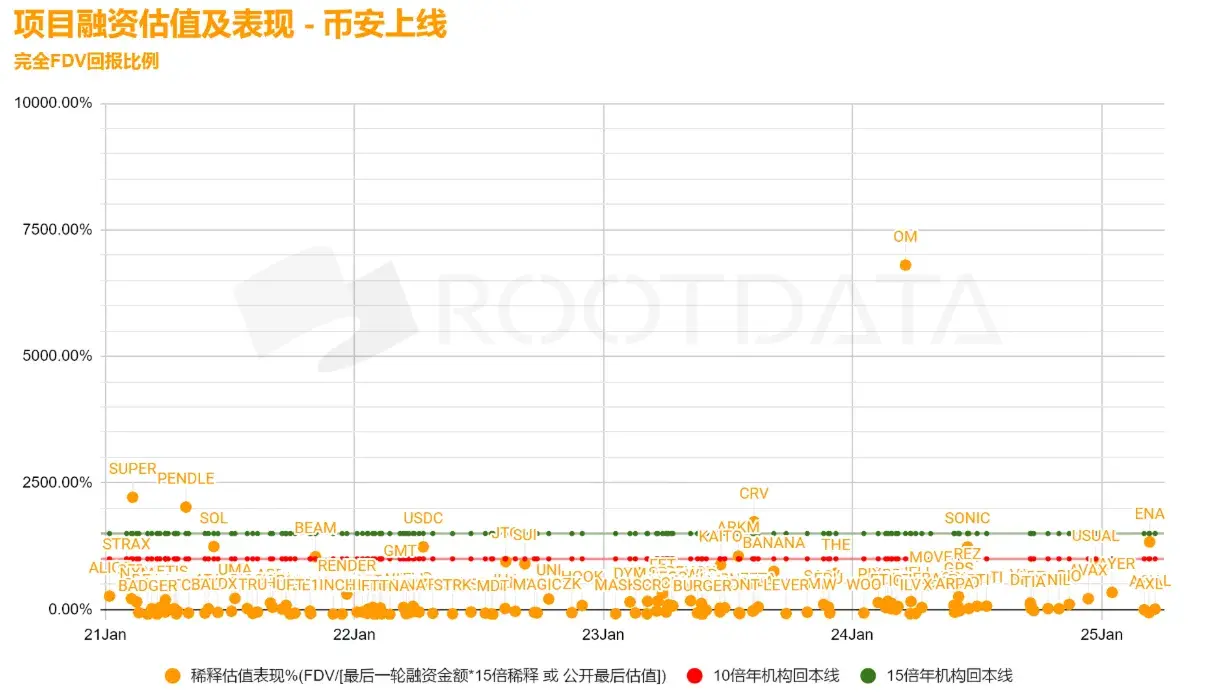
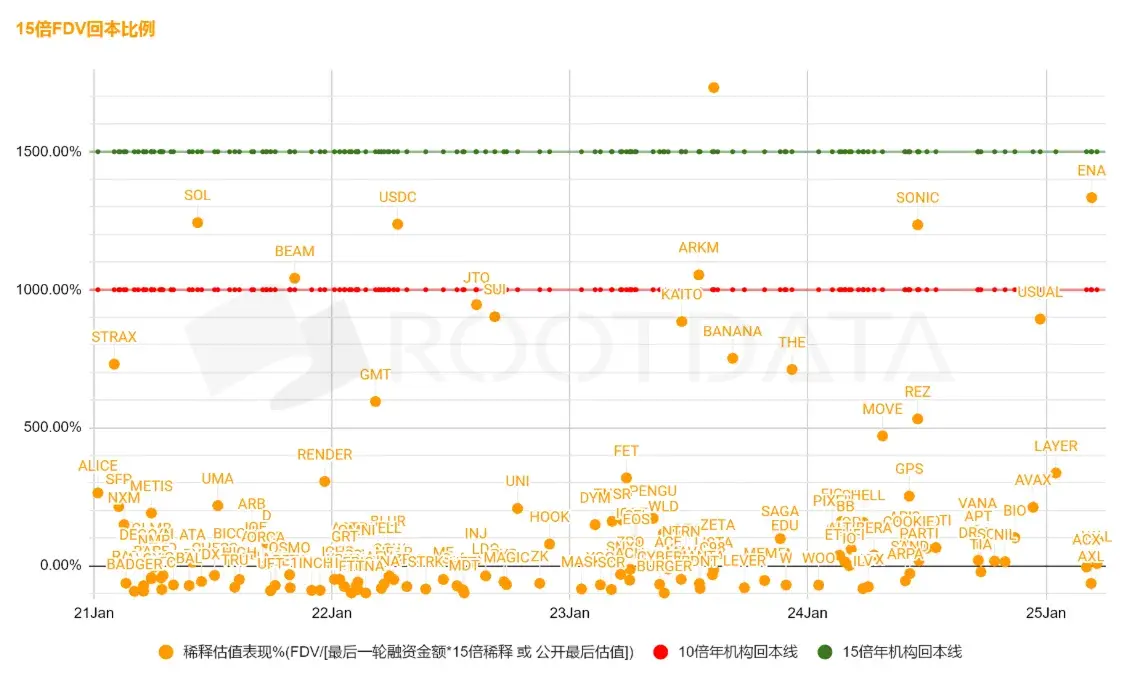
In this cycle, the crypto community is popular with the slogan of "token listing immediately shorting," which indirectly reflects the negative reaction and rejection of independent investors towards institutional projects. According to RootData, the performance of institutional tokens listed on Binance and the final financing of projects under the "3+1" unlocking rules, institutional investors face strict exit pressures:
a. They need to achieve a 5-10 times return in the first unlocking to cover the overall cost.
b. Data shows that since Arbitrum in 2021, few projects with later financing rounds can recover costs without any hedging strategies.
c. In the newly issued tokens in 2024, more than half of the FDV is below five times the last round of financing, directly leading to:
- 10% of the initial unlocking by institutions causes a -50% actual book loss.
- Subsequent unlocking triggers a chain of selling pressure.
This also indirectly confirms the hidden reason behind the rise of institutional transactions — declining returns on token investment portfolios. In short, the tokens listed on Binance are already like this, and institutional investors are even more frustrated with tokens that can only be listed on T1 and T2 exchanges with insufficient liquidity.
Crypto Investment is Becoming More Rational
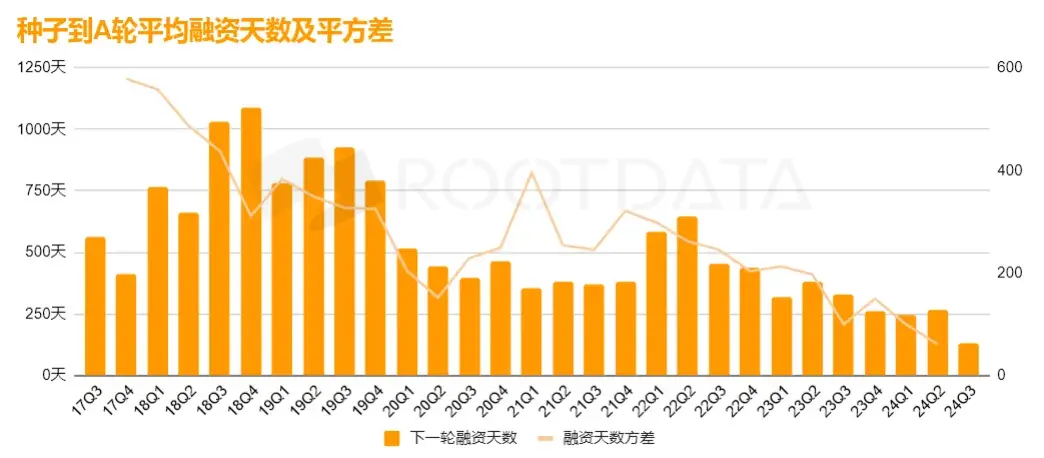
Based on the data from RootData on the crypto financing market, from seed rounds to A-rounds, the number of days and the square variance of the next round of financing. We found that from 2017 to 2020, the average number of days for the next round of financing gradually increased, reaching a peak in Q4 2018 (1087.75 days). This reflected the slow financing pace and low liquidity of early-stage crypto projects. The variance was high between 2017 and 2020, peaking in Q4 2017 (578.63 days), indicating a high degree of uncertainty in project financing timing. During the ICO and DeFi waves from 2017 to 2019, the crypto industry was in an exploratory phase, with project quality varying widely. Some projects had extended financing cycles due to immature token economics models.
After 2021, the number of days for the next round of financing decreased significantly, reaching 317.7 days in Q1 2023 and further shortening to 133 days in Q3 2024. This indicates that as the market matures, the financing efficiency of high-quality projects has improved, and capital allocation has become more concentrated. Since 2021, the variance has gradually decreased. This indicates that the market has entered a rational development stage, with financing cycles among projects becoming more consistent. Since 2021, institutional investors have been more inclined to support top projects. The concentration of funds in seed and A rounds has allowed high-quality projects to complete the next round of financing more quickly. At the same time, capital has gradually abandoned projects lacking innovation and profitability, accelerating the industry's elimination of the weak.
Summary
The crypto industry is undergoing a transition from early chaos to rational development. Since 2021, both curves have shown a continuous downward trend, with the decline in the number of days for the next round of financing and variance not only reflecting an improvement in capital allocation efficiency but also highlighting the industry's preference for high-quality projects. In the coming years, projects that can quickly adapt to market demands, integrate emerging technologies like AI, and achieve commercial closed loops will become the focus of capital.
In summary, the current market has higher requirements for profitability and product-market fit (PMF). Founders need to quickly validate their business models at the seed round to shorten subsequent financing cycles. Institutional investors should focus on high-potential projects that can complete multiple rounds of financing in a short period. These projects usually have a clear growth path and strong execution capabilities.
I believe that the commonly held view in the crypto community that liquidity contraction is not the main reason for the poor performance of the crypto financing market and crypto prices. 2024 is the first year of compliance for the crypto industry and also a turning point for more mature institutional entry. However, crypto founders have not submitted a perfect answer sheet combining AI and crypto technology to native crypto investors, which is the main reason for the poor performance of cryptocurrencies in this AI and crypto overlapping technological cycle, or the lack of liquidity overflow from AI applications.
Disclaimer: Contains third-party opinions, does not constitute financial advice


OpenClaw Practical Guide
This column focuses on the real progress of Agents: technological evolution, application implementat

Crypto Weekly
Tracking on-chain movements of the smart money and institutions

Frontier Insights
Spotlight on Frontier, trending projects, and breaking events

Blowup Alert
As the 2026 crypto bear market deepens, exit scams and project blowups are becoming increasingly fre

Regulatory Watch
American Crypto Act – timely interpretations of policies worldwide

Popular Airdrop Tutorial
Selected potential airdrop opportunities to gain big with small investments

FusnChain
FusnChain