
ChainThink
Stay ahead, master crypto insights
From Hype to Utility: The Value Transformation of Web3 AI Agents
From Hype to Utility: The Value Transformation of Web3 AI Agents

2025-04-12 23:42
Original Title:Post-AI Agent Bubble: Where’s the Real Value in Web3 AI?
Original Author: 0x Jeff
Original Translation: Ethan, Odaily Star Daily
Summary:
The total market value of AI agents grew from 0 to over $20 billion within a few months, and then crashed quickly. However, this field is gradually maturing. Infrastructure, decentralized AI, and real utility are gradually taking the lead. How will the next wave shape the future, and why should it be paid attention to?
In the fourth quarter of last year, we saw the fastest growing area "AI Agents", which grew from zero to over $20 billion within a few months - from some interesting, charming, and entertaining "agents" to financial agents that promise to change the world and make you rich through trading and investment. And... not only those agents that can make you rich, investment DAOs also appeared... human (or agent) DAOs (3, 3) invest in other agents.
From Hype to Infrastructure: The Evolution of Web3 AI Agents
We all understand that in an emerging field (and against the backdrop of Web2 AI, Trump's election and support for cryptocurrency and AI as new catalysts), people don't care about fundamentals. Anything that can make noise, look like hype, and have cool demos can quickly reach a market cap of over $1 billion.
@virtuals_io became the ecosystem that occupied the market, captured market attention, told good stories, and created the best narrative. This attracted a large number of creators to publish content on Virtuals, launch projects, and attracted retail investors, capitalizing on the hype.
@elizaOS followed with a different approach - open-source AI, allowing any developer to use "shovels" to dig gold. A massive spread effect formed around this concept, with rapid adoption and a sharp increase in stars and forks on GitHub (these numbers continue to grow).
Virtuals' valuation has grown to over $5 billion, while Eliza reached about half of that at its peak, and other interesting agents have reached valuations in the 8-9 digit range, such as AIXBT reaching $1 billion. Of course, the situation is very different now, with the valuations of newly launched and well-performing agents averaging between $3 million and $10 million. The valuations of the old well-performing agents average between $10 million and $50 million. The valuation ceiling has been compressed, and the overall market cap has shrunk from $20 billion to a range of $4 billion to $6 billion.
Infrastructure Acceleration and Rapid Advancement of Web2
The market is now starting to focus on "pure fundamentals," and people are more concerned about infrastructure, decentralized AI, especially the AI models in Web2 continue to accelerate at an astonishing speed - Meta's Llama, OpenAI's GPT, Grok, DeepSeek, Alibaba Qwen, etc., release new improvements and optimized models every month. The image generation model of ChatGPT triggered a "Ghibliization" trend shortly after its release.
On top of all this, the consumer layer of Web2 has developed much faster than before due to the enhancement of AI model capabilities - things that were previously impossible are now possible. For example, tools like Lovable, Bolt, Cursor, and Windsurf enable developers to launch more products faster. Agent workflows and AI agents are everywhere. The entry barrier has been reduced, and the switching cost for users is almost zero - if you dislike an application, you can easily find a more competitive service or product with a better interface and user experience.
Data Ownership Awakening: The Call for Decentralized AI
At the same time, many people began to think: "Since so many agent applications are using centralized technology, who owns my data? Where will my data go? If I discuss some private content with AI, will it keep it confidential, or will it leak out?" This issue is particularly important, especially because OpenAI recently mentioned that ChatGPT can now reference your past chat history to provide more personalized responses.
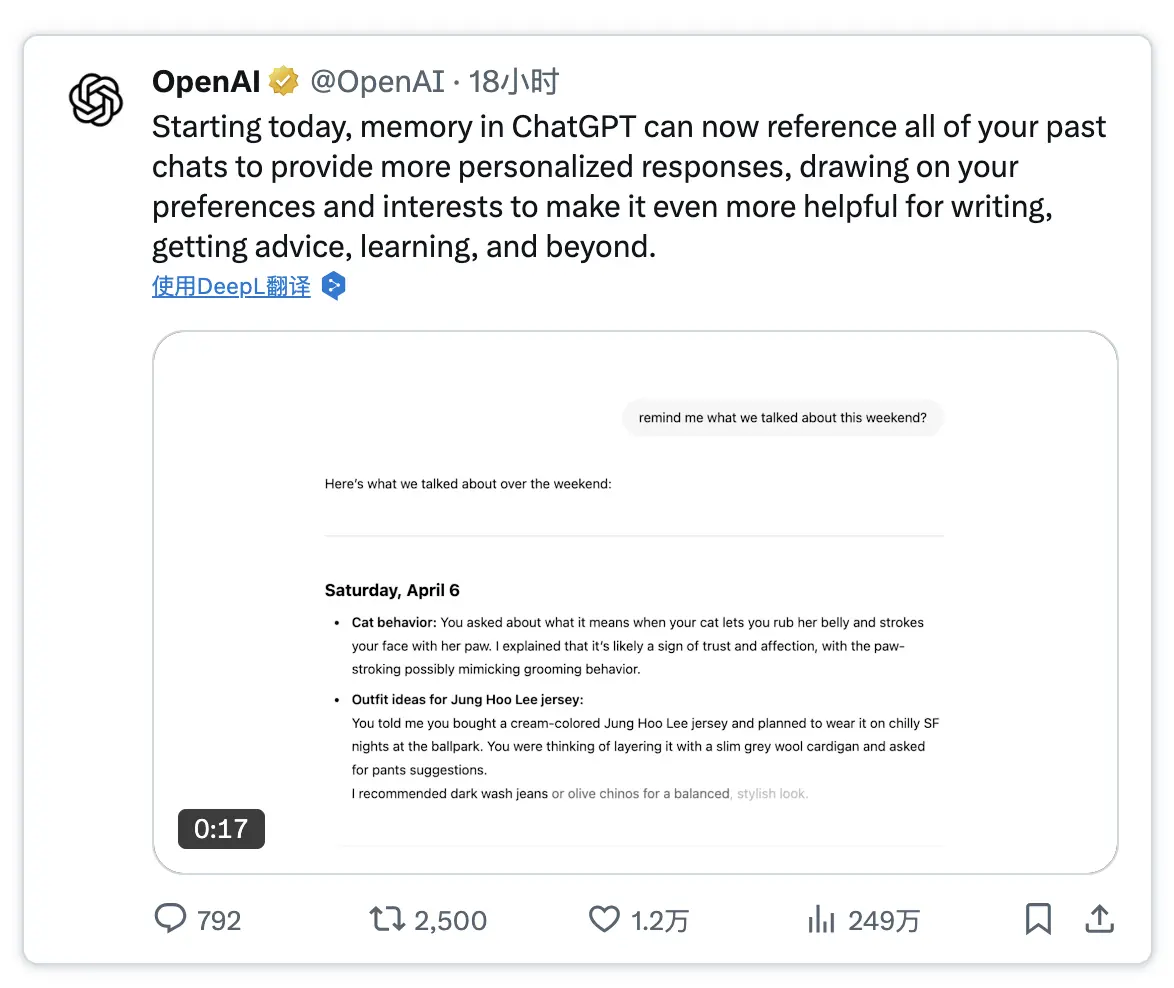
Ah... all of this sounds cool, and it may very well trigger a wave of personalized AI agents, such as co-pilots, personal secretaries, therapists, partners, etc. But you can imagine what consequences it would have when others own or control your data.
Decentralized AI (DeAI): The Power Driving the Future
Last year, I made some predictions, one of which was that decentralized AI would emerge in the second quarter of 2025, with infrastructure enhancing confidentiality, transparency, verifiability, and data ownership, thus gaining more adoption and attention.
This trend can be divided into three main parts, with many trends intersecting or intertwining:
-
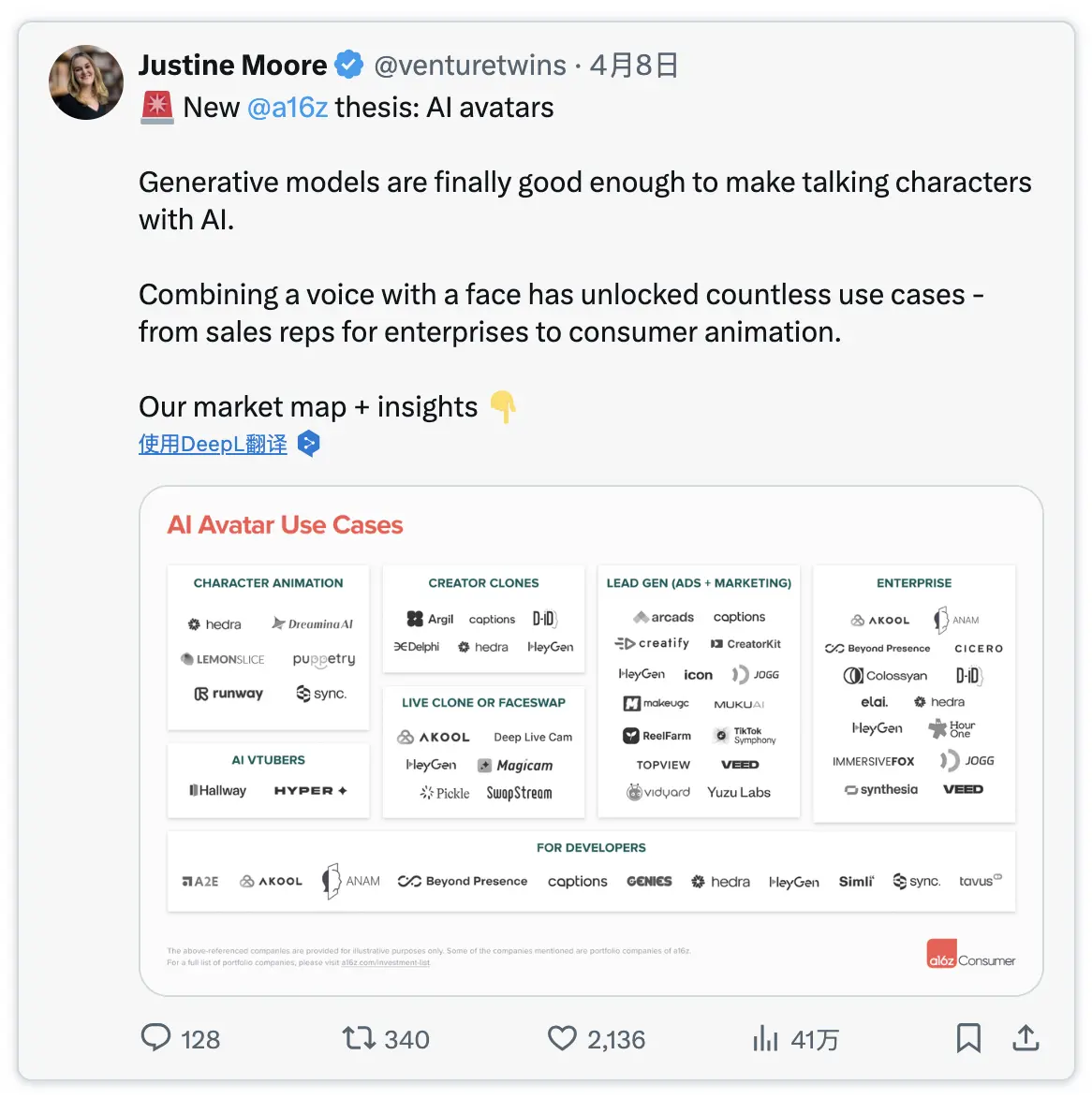
Web2 AI Venture Capital Trends (YC companies launching vertical agents, a16z laying out for future consumer trends, Perplexity launching an AI fund)
-
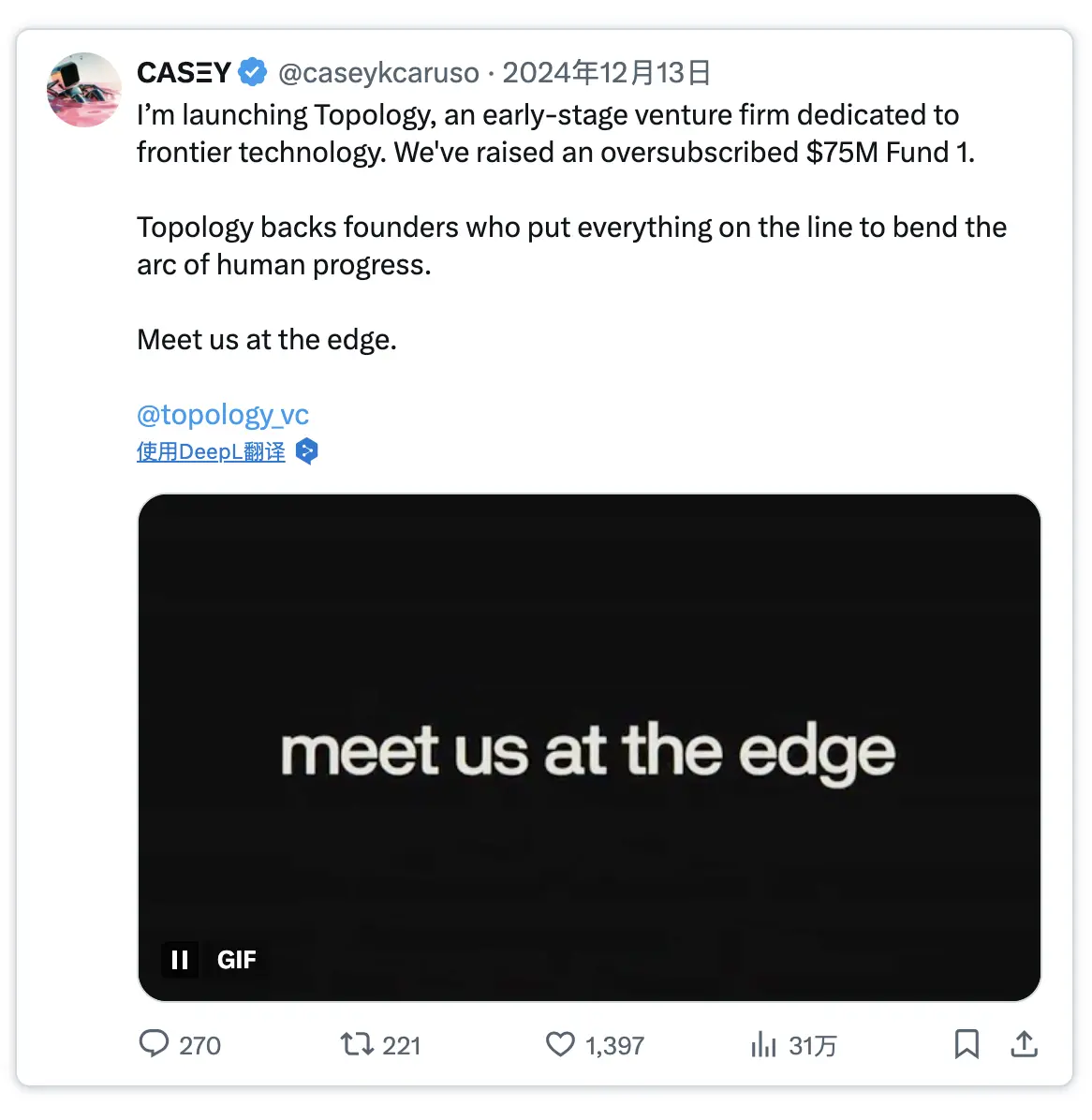
Web3 AI Venture Capital Trends (DeAI Infrastructure Investment, Distributed Training, Inference Networks, etc.)
-
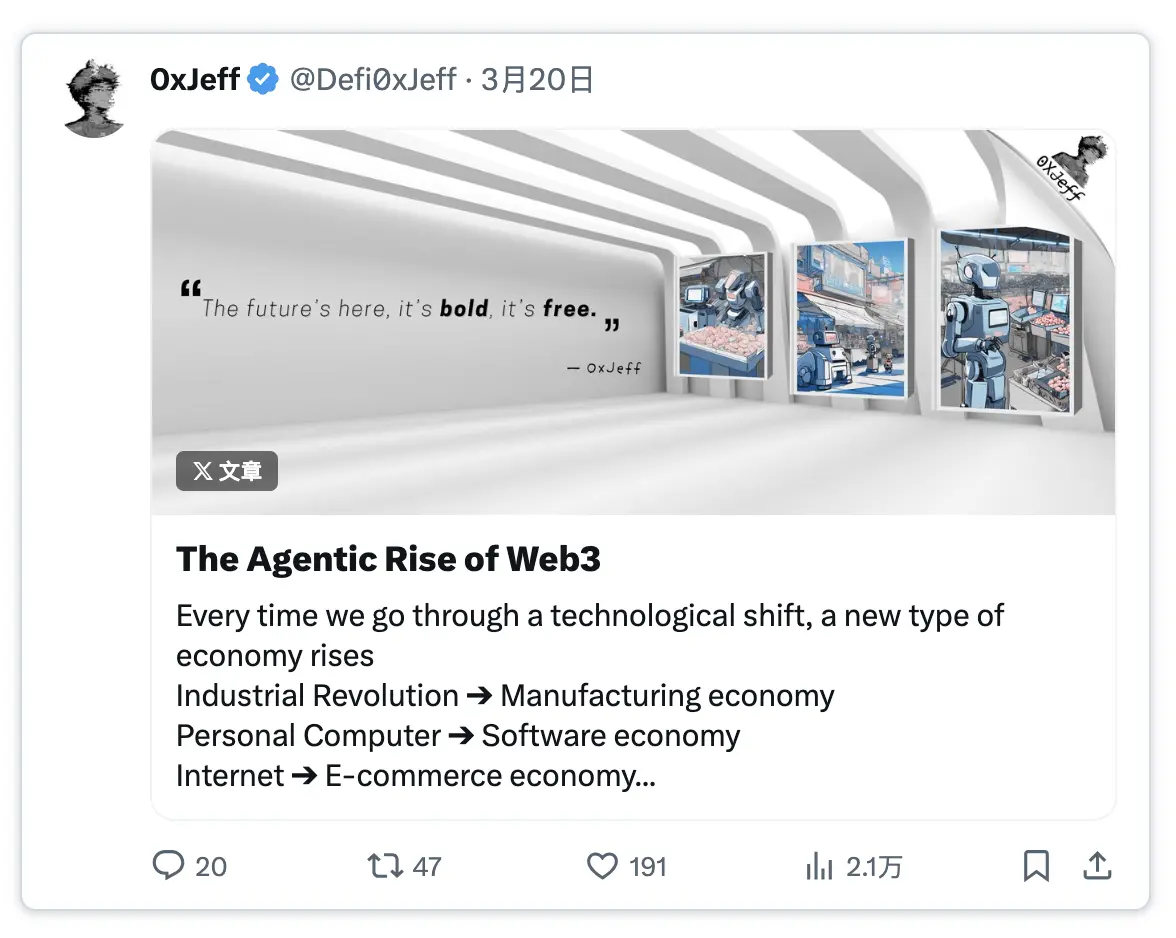
Web3 AI Retail Trends (AI Agent Ecosystem, Consumer Agents, AI Consumer Applications)
Web2 and Web3 AI: Collision of Two Worlds
For Web2, since the total addressable market (TAM) is much larger than Web3, meaning that many enterprises are seeking to transform and optimize their businesses through AI, improve workflows to generate more leads, more conversions, higher sales, retain more customers, reduce administrative costs, and operate more efficiently. Therefore, many enterprises seek solutions that can solve their specific pain points.
This optimization demand has attracted many young entrepreneurs seeking better ways to integrate AI agents into their workflows. Compared to traditional SaaS, AI agents offer solutions that can save significant funds or generate more leads. This allows agent startups to charge higher subscription fees for their usage (which is why we see many startups achieving 7-8-digit annual revenues within a few months).
For Web3 Venture Capital, the trends are completely different, as blockchain provides the perfect infrastructure layer for DeAI, such as: verifiable / immutable transaction records, trustless environments, decentralized computing, trust-minimized AI inference and training (apologies for using so many terms, but you should get the idea I'm trying to convey).
In short, the future direction is for people to understand how their data is processed, understand the thinking process of AI, own their data, own their models and use cases, and have the motivation to share (without censorship), etc. Web3 venture capital has already invested in these future trends.
The AI Agent Trend in the Retail Market: Not Just Entertainment
For the Web3 retail market, DeAI is very difficult to understand, as it requires you to learn a lot of terminology and understand the key points (sometimes it feels like alien language). That's why retail market users prefer the easiest to understand things - for example, "Web3 AI agents" that start with chatbots, which are funny and can do entertainment content.
As the retail market continues to delve into this industry, they gradually realize that these are just basic skills like chatting and analyzing, which are not sufficient to create sustainable value for users. This realization (along with a poor market environment) has prompted the market to consolidate, and useless agents have gradually disappeared, while useful agents still survive (although their valuations have greatly decreased).
People begin to realize that AI products must have a core practical use case. This awareness has prompted teams to either develop genuine AI products or collaborate with truly technically capable AI companies, such as @AlloraNetwork, @opentensor (Bittensor).
This transformation has two benefits:
(i) It makes people more aware of the infrastructure.
(ii) It provides real use cases for AI agents, allowing them to demonstrate their value to the community.
-
Before the transformation: Agents with basic skills/use cases (chatting, analysis, etc.)
-
After the transformation: Agents with advanced practical skills (such as AI-driven betting, trading, liquidity provision, agriculture, etc.)
Agents like @AskBillyBets, @thedkingdao have become ideal agents, showcasing the Bittensor subnet, bringing cool technology into the mainstream.
Bittensor Ecosystem: New Investment Opportunities in Decentralized AI
I find one interesting aspect of the Bittensor ecosystem is that it is an ecosystem full of decentralized AI where anyone can invest. Nowadays, most decentralized AI projects are limited to VC or strategic investors participating behind closed doors, as they are still in the early stages, and many projects have not yet issued tokens.
But Bittensor allows anyone to stake their $TAO into the subnets they want to support, thereby converting into alpha tokens of the subnets (directly participating in DeAI projects).
Although I have publicly expressed disappointment with bridging and trading experiences, the technology, products, and atmosphere of Bittensor are excellent, especially the team at @rayon_labs.
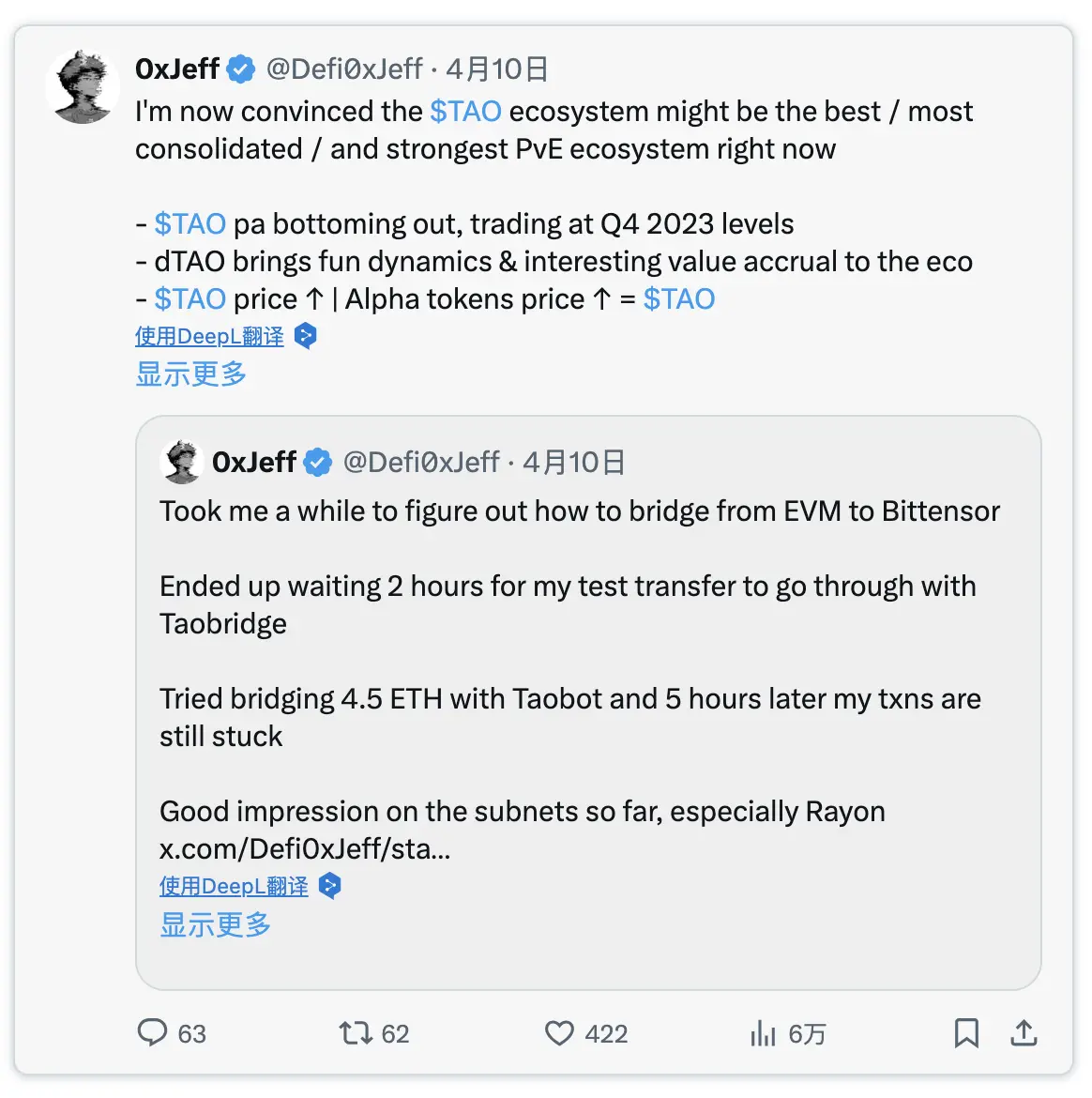
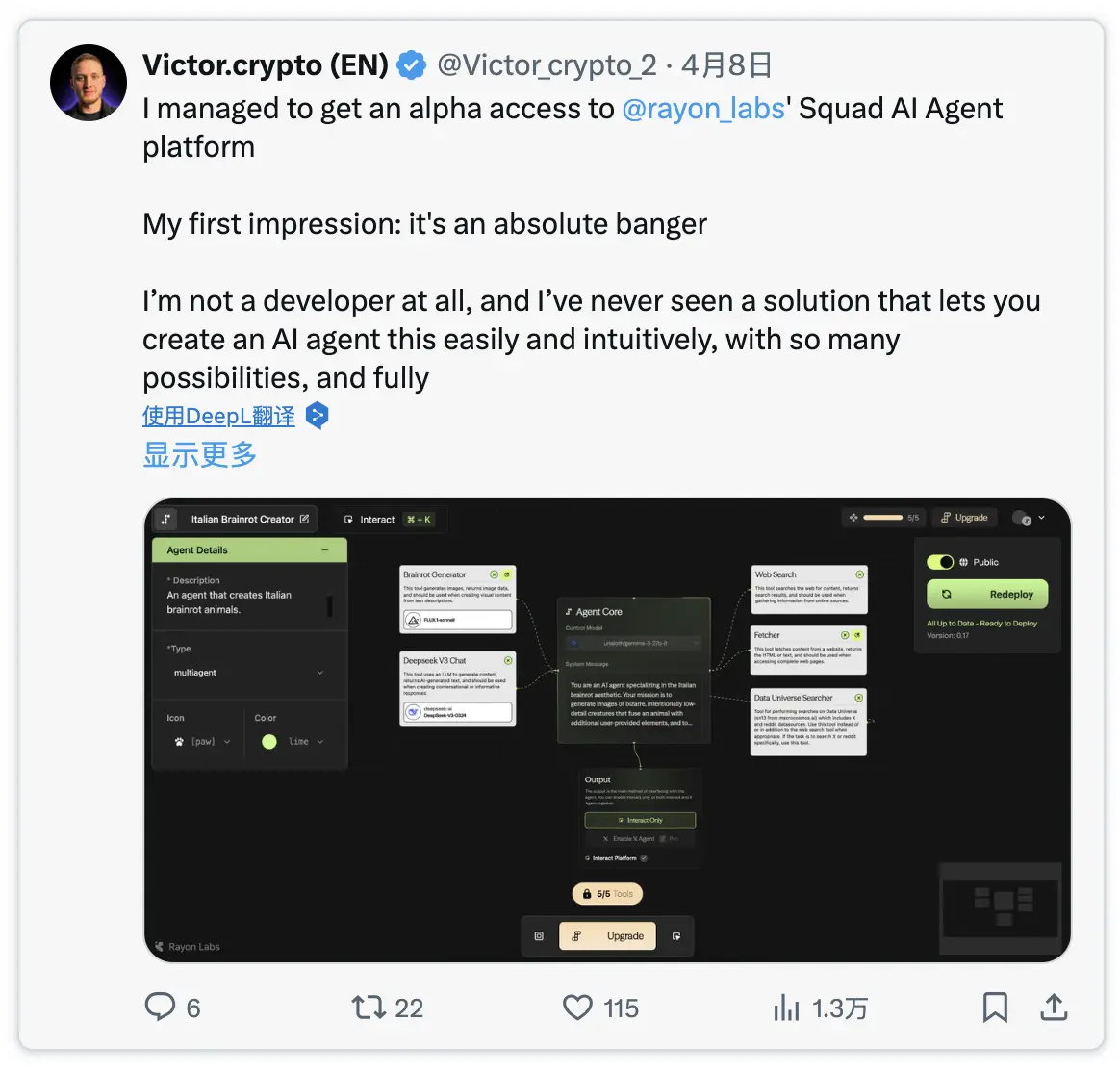
I like Rayon Labs because they have done many consumer-friendly works in optimizing UI/UX. Considering the characteristics of dTAO - market determines the emission of each subnet and the pricing of the subnet - therefore, building products that are easy to understand and comprehend for each subnet becomes particularly important.
Rayon has many cool subnets (the coolest might be Gradients, an AutoML platform that makes it easy to train models on the platform), even cooler is their latest flagship product Squad AI agent platform, which allows users to create agents by dragging boxes (similar to Figma's AI agent creation method).
Conclusion
I am still in the early stage of deeply understanding Bittensor, and I will later publish an article specifically to share the interesting things I have found and show how to seize opportunities from it.
Disclaimer: Contains third-party opinions, does not constitute financial advice


AI Practical Guide
This column focuses on the real progress of Agents: technological evolution, application implementat

Crypto Weekly
Tracking on-chain movements of the smart money and institutions

Frontier Insights
Spotlight on Frontier, trending projects, and breaking events

Blowup Alert
As the 2026 crypto bear market deepens, exit scams and project blowups are becoming increasingly fre

Regulatory Watch
American Crypto Act – timely interpretations of policies worldwide

Popular Airdrop Tutorial
Selected potential airdrop opportunities to gain big with small investments

FusnChain
FusnChain